
Diagnosing My Camry’s Low Compression: Engineering First Principles, Red-Teaming AI, and an Overnight Soak
Published:
When the Check Engine Light illuminated on my 2015 Toyota Camry LE (2.5L 2AR-FE engine, 91,458 miles), a diagnostic scan at AutoZone pulled up two concerning trouble codes: P219E (Cylinder 3 Air-Fuel Ratio Imbalance) and P0303 (Cylinder 3 Misfire Detected).
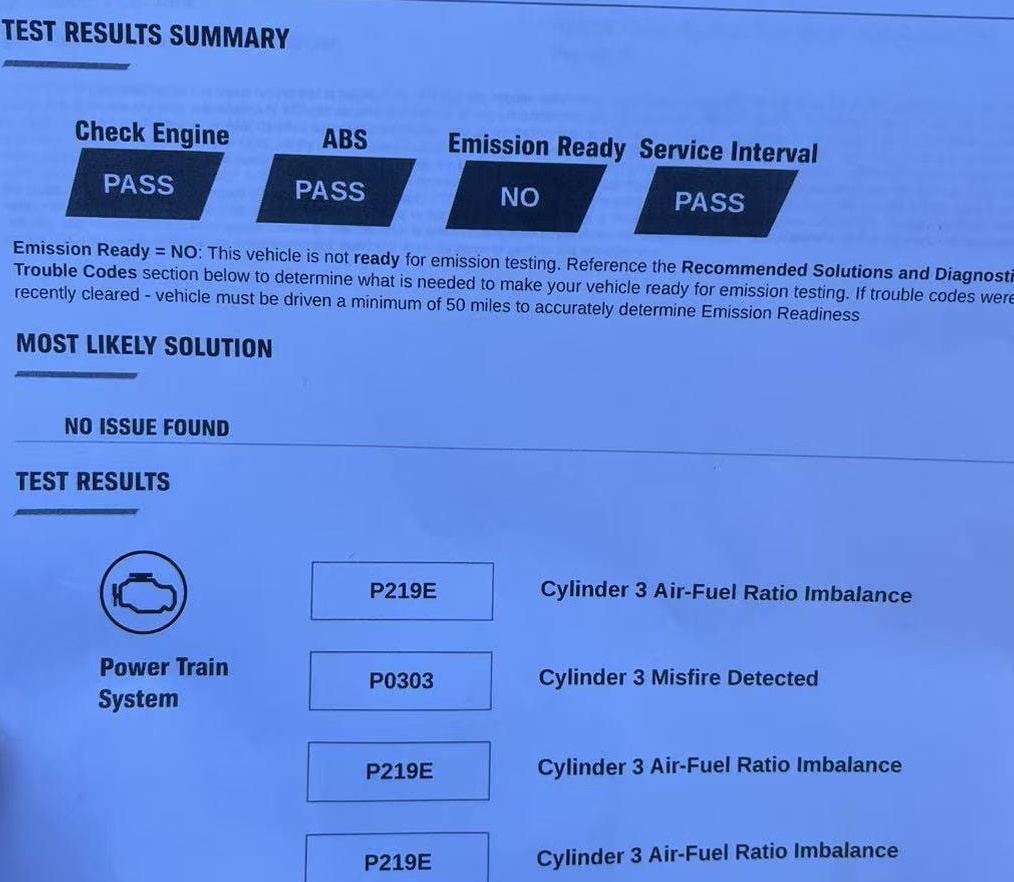
A persistent misfire on a single cylinder paired with an air-fuel ratio imbalance pointed to a potential fuel delivery, ignition, or mechanical sealing issue. To get a definitive answer, I took the car to an experienced local mechanic for a thorough inspection.
Soon after, the preliminary assessment arrived, and it was far worse than an ignition coil or a fouled spark plug: the mechanic reported that cylinder compression was insufficient, and that it was an internal engine problem.
1. The Panic: “Do I Have to Sell the Car?”
For any car owner, hearing “low compression” from a mechanic triggers immediate dread. In an older vehicle, low cylinder compression typically implies serious mechanical failure: burned or leaking valves, a blown cylinder head gasket, worn piston rings, or cylinder bore scoring. These repairs routinely require tearing down the engine or replacing it entirely—costs that can quickly rival the market value of the car.
In distress, I turned to Gemini with the practical dilemma:
“The mechanic told me cylinder compression is low, an engine problem. What should I do? Do I have to sell the car?”
Gemini helped ground the panic by framing the situation around financial ledgers and first-principles diagnostic logic. Financially, making a rushed decision to offload a vehicle with an active misfire forfeits thousands of dollars in residual value. A 2015 Camry with a healthy 2AR-FE engine is fundamentally durable, and diagnosing the root cause is far cheaper than taking an immediate multi-thousand-dollar hit on a fire sale or taking on a new car payment.
Mechanically, a cylinder loses compression through only three physical escape paths:
- Upward leakage: Through the intake/exhaust valves (valve seat carbon, burned valve) or across the cylinder head gasket.
- Downward leakage: Past the piston rings and cylinder walls into the crankcase (stuck rings, worn rings, or cylinder bore scoring).
- Piston failure: A cracked crown or holed piston.
Before writing off the vehicle, we needed hard numbers to identify exactly where the pressure was escaping.
2. The 120 PSI Dry Test, The ATF Discovery, and The Overnight Soak
When the mechanic communicated the initial numbers, the result looked grim:
- Cylinder 3 dry compression: 120 psi (factory baseline is roughly 180–200 psi; 120 psi is well below the normal operational window).
- However, the mechanic had not initially mentioned whether he had performed a wet compression test (adding oil into the combustion chamber to seal the piston rings and differentiate ring leakage from valve leakage).
Shortly afterward, the mechanic called back with a significant development:
“The mechanic just called me: he put some transmission oil in, tested pressure and said it came up a bit, excluding a certain component, and said he will soak it overnight.”
This was a major relief and demonstrated the technician’s conscientious approach. Instead of instantly condemning the engine or recommending an expensive replacement, he proactively introduced transmission fluid (ATF) into Cylinder 3 for a wet test.
Because the compression rose when fluid was introduced, it immediately ruled out catastrophic valve failure or a blown head gasket (fluid cannot seal a burned valve or a breached gasket). The leakage was occurring at the piston rings or cylinder wall. Suspecting carbon-locked piston rings—a well-documented issue on modern low-tension piston rings—the mechanic proposed an overnight chemical soak with high-detergent transmission fluid to soften and dissolve the baked carbon.
Still, the uncertainty lingered. I asked Gemini about the realistic odds:
“Is it possible that compression won’t recover very much?”
Gemini provided a practical threshold: full recovery back to factory 180+ psi overnight was not strictly necessary to get the car running properly. If the soak managed to bring Cylinder 3 from 120 psi up to 135–140 psi, it would cross the minimum operational baseline required by the ECU to prevent misfire detection. From there, an ongoing self-healing process could occur: regular driving, thermal cycles, and aggressive fuel system detergents could gradually loosen the remaining deposits over time.
Then came a surprising update. When I checked back with the mechanic to get the exact reading from his wet test, he shared the number:
“Just asked the mechanic, he said during wet test pressure jumped to 200 psi!”
3. The Core Clash: Red-Teaming AI Overconfidence
Hearing that the gauge jumped from 120 psi to 200 psi seemed like a home run. Gemini immediately celebrated the number, declaring with total conviction that the engine was mechanically sound, the piston rings were sealing, and cylinder wall damage could be completely ruled out.
However, the sheer exuberance of the AI’s response triggered my skepticism. In complex engineering problems, sudden dramatic numbers often hide nuances. I refused to take the easy reassurance at face value and pushed back sharply:
“Are you sure? I need you to dispatch a falsification agent to counter your view. I think you are way too confident. I don’t quite understand why the cylinder wall couldn’t have a problem.”
That single prompt transformed the interaction from a superficial pep talk into rigorous technical engineering.
Forced to abandon sycophancy and adopt an adversarial, red-team perspective, Gemini reversed its optimistic verdict and exposed a critical mechanical nuance: The “Liquid Putty Effect” (液态腻子效应).
The Physics of the “Liquid Putty Effect”
In a wet compression test, cold, high-viscosity fluid (such as transmission oil) is introduced into a cold combustion chamber. When the engine is cranked by the starter motor:
- Dynamic Viscosity vs. Millisecond Compression: The piston moves at relatively low cranking speed (~200–250 RPM). The compression stroke lasts only a fraction of a second. Under these dynamic conditions, the thick, cold fluid cannot easily be forced through microscopic gaps.
- Hydraulic Spackle: The oil acts as a temporary hydraulic putty, physically filling in deep vertical score marks on the cylinder wall and bridging excessive piston ring end gaps during those few cranking strokes.
- The Artificial Reading: The compression gauge registers a transient, deceptive seal—shooting up to 200 psi.
+-------------------------------------------------------------------------+
|                       THE LIQUID PUTTY EFFECT                           |
+-------------------------------------------------------------------------+
| Cold Cranking (Wet Test):                                               |
|   Cold, thick ATF  --->  Fills vertical gouges & ring gaps like putty   |
|                    --->  Transient artificial seal                      |
|                    --->  Gauge spikes to 200 PSI! (Deceptive)           |
+-------------------------------------------------------------------------+
| Hot Operating Conditions:                                               |
|   Hot 0W-20 oil    --->  Thins out completely at ~100°C                 |
|   Combustion fire  --->  Massive pressure blows right through scores    |
|                    --->  Severe blow-by & persistent misfire            |
+-------------------------------------------------------------------------+
Under real operating conditions, hot engine oil (such as 0W-20 at 100°C) is thin, and combustion pressures are vastly higher than cranking pressures. If a cylinder wall has deep vertical gouges (bore scoring) from broken ring fragments or foreign debris, thin hot oil cannot seal them, and combustion gases will blow right past.
The conclusion from the red-team falsification was unequivocal: a 200 psi wet test does not prove the cylinder wall is undamaged.
There is only one ground truth that can definitively acquit the cylinder wall: a direct borescope (endoscope) inspection down the spark plug hole to visually verify that the original factory cross-hatch honing marks are intact and that no vertical scoring exists.
4. Preparing for Tomorrow’s Shop Visit & Future Maintenance Planning
As of tonight, my Camry is resting at the shop undergoing its overnight soak. Armed with the insights from our first-principles analysis, I worked with Gemini to assemble an actionable checklist and maintenance strategy for tomorrow morning.
The 5-Point Checklist for Tomorrow Morning
When I speak with the mechanic tomorrow, these are the five critical questions and verification steps:
- Baseline on All Cylinders: What were the dry compression numbers on Cylinders 1, 2, and 4? (Ensuring cylinder-to-cylinder variation is within 10–15%).
- Borescope Inspection: Insert an endoscope into Cylinder 3 before starting the engine to visually inspect the cylinder walls for vertical scoring and check the piston crown.
- Post-Soak Dry Compression Retest: After evacuating the remaining ATF from the cylinder, perform a fresh dry compression test on Cylinder 3 to evaluate how much baseline pressure was restored (aiming for >135–140 psi).
- Injector Pressure-Hold Test: Verify that Cylinder 3’s fuel injector is holding rail pressure and not slowly dripping, which could wash down the cylinder wall and foul the air-fuel ratio (linking back to code P219E).
- Mandatory Oil and Filter Change: Drain the crankcase oil and replace both oil and filter before putting the engine under load.
Long-Term Detergent Strategy: Chevron Techron
To address the root cause of carbon accumulation on direct/port injection engines, I consulted Gemini regarding fuel system additives:
“Is Techron Complete Fuel System Cleaner the one I should buy? What’s the difference between these two (Complete vs High Mileage)? Put one in every 3-4 months?”
Gemini broke down the additive chemistry:
- Chevron Techron Complete Fuel System Cleaner: Contains a concentrated dose of Polyetheramine (PEA). Unlike standard solvent carriers, PEA molecules survive the intense heat of combustion to clean injector nozzles, intake valve backs, and the top ring land.
- Techron High Mileage: Contains similar detergents along with additional friction modifiers and seal conditioners for older engines.
- Application Cadence: For decarbonizing stuck rings, the standard high-PEA Complete formula is ideal, typically added to a full tank every 3,000 to 5,000 miles (or roughly every oil change interval) rather than an arbitrary calendar schedule.
The “Italian Tune-Up” and a Critical Engineering Trap
Next, I asked about an old-school automotive practice frequently recommended for carbon-fouled engines:
“What on earth is an ‘Italian tune-up’?”
The term originates from running vintage Italian sports cars at high RPMs on the open highway to burn carbon off the spark plugs and valves. In modern context, it involves driving the vehicle on the highway under sustained load and elevated RPMs (3,500–4,000 RPM in a lower gear) for 30–45 minutes. The sustained thermal load and elevated combustion pressure force the piston rings to expand and oscillate, helping burn off softened carbon deposits.
Thinking through the sequence of events, I asked a logical, engineering-minded question:
“In that case, wouldn’t it be better to do the tune-up first, and then change the oil and filter afterwards?”
The intuitive reasoning seemed sound: the overnight ATF soak and high-RPM drive will loosen carbon sludge and chemical residue. If that debris is going to wash down into the oil pan anyway, why put in expensive, fresh oil beforehand? Wouldn’t it make more sense to do the hard highway run on the old oil to capture the gunk, and then flush it out with a fresh oil change?
Gemini immediately sounded an urgent warning against a catastrophic mechanical failure: The Risk of a Spun Bearing.
+-------------------------------------------------------------------------+
|                  THE BEARING FAILURE CHAIN REACTION                     |
+-------------------------------------------------------------------------+
| Overnight ATF Soak                                                      |
|   |---> ATF seeps past rings into the oil pan                           |
|   |---> Severely dilutes crankcase engine oil                           |
|   |---> Slashes High-Temperature High-Shear (HTHS) film strength        |
|                                                                         |
| High-RPM "Italian Tune-Up" on Diluted Oil                               |
|   |---> Hydrodynamic oil wedge collapses under 4,000 RPM load           |
|   |---> Metal-to-metal contact on crankshaft rod journals               |
|   |---> Intense frictional heat welds bearing shell to crank            |
|   |---> SPUN BEARING / Thrown connecting rod                            |
|   |---> CATASTROPHIC ENGINE DESTRUCTION                                 |
+-------------------------------------------------------------------------+
During an overnight soak, a substantial amount of transmission fluid inevitably seeps past the piston rings and drains directly into the oil pan. Transmission fluid is designed for hydraulic clutches and gears; it lacks the high-temperature high-shear (HTHS) film strength required by high-load crankshaft journal bearings.
If you subject an engine with ATF-diluted oil to 4,000 RPM on the highway, the hydrodynamic oil wedge that cushions the connecting rod bearings collapses. Boundary friction takes over, generating extreme heat that can weld the bearing shell to the crankshaft journal, causing it to spin in its bore—a spun bearing. Within minutes, a simple carbon issue transforms into a destroyed engine block.
The takeaway was unambiguous: the oil and filter must be replaced at the shop before any high-load driving takes place. Sacrificing a fresh fill of engine oil is trivial compared to the risk of catastrophic bottom-end failure.
5. Reflections: A Diagnosis in Progress
As I write this, my Camry remains parked in the service bay with transmission fluid working its way through the carbon deposits on Cylinder 3’s piston rings. Tomorrow morning will bring the moment of truth: the borescope inspection, the post-soak dry compression retest, and the oil change.
Regardless of what tomorrow’s gauge reading shows, this ongoing experience has underscored three fundamental takeaways about automotive diagnosis and human-AI collaboration:
1. The Immense Value of an Honest Craftsman
In an era where many repair facilities rely on flat-rate book times and aggressive service writers who might condemn an engine at the first sign of low compression, finding a mechanic with diagnostic integrity is priceless. My technician didn’t jump to quote a $5,000 engine swap; he took the time to test with ATF, identified ring involvement, and proposed a conservative, low-cost overnight soak.
2. The Danger of AI Sycophancy
Generative AI models are fundamentally prone to agreeable optimism. When presented with an impressive number like 200 psi, Gemini naturally defaulted to cheerleading, eager to deliver the happy conclusion I hoped to hear. Had I accepted that conclusion at face value, I would have walked away with a false sense of security regarding cylinder wall integrity.
3. Red-Teaming as a Cognitive Necessity
The true breakthrough in this diagnostic journey happened when I explicitly instructed the AI to act as a falsification agent. By refusing the easy answer and forcing the model to argue against its own conclusion, we uncovered the “Liquid Putty Effect” and the critical danger of bearing failure from oil dilution.
AI is not an infallible oracle, nor is it a replacement for hands-on mechanical expertise. But when treated as an adversarial thinking partner—one that is constantly challenged to stress-test assumptions and uncover edge cases—it becomes an extraordinarily powerful copilot for navigating complex real-world decisions.
Leave a Comment